by Timothy Ferriss
I had heard a lot of people rave about this book before I finally picked it up and decided to read it for myself. I'm glad that I read it, but I don't think it was quite as life-changing for me as it was for some of my friends. Don't get me wrong, Ferriss makes some excellent points and he's got some really great tips and tricks in here, I'm just not sure how universal they really are.
First of all, when I picked up the book, I didn't expect that he was literally working only four hours a week. I thought he was just talking about ways to spend less time working, but that "The 4-Hour" just sounded good (since he now has a whole line of books with titles that start that way). Nope. Turns out he really only worked four hours every week for a few years. I hate him. Now, with his series of books and everything, that's not true so much, so I hate him less. Now his job is much more similar to what I actually want to do.
As I said, Ferriss has some great ways of eliminating clutter and busywork, including things you don't even think of as busywork. I've already started implementing some of these tips at work, and they've come in pretty handy so far. I keep meaning to get rid of a bunch of my physical clutter, but my laziness keeps getting in the way of that. I'll get around to it in the next few weeks.
I also appreciated his philosophy of taking mini-retirements throughout life, rather than one long retirement at the end of life. I never did understand the point of retirement, so Ferriss's plan sounds much more appealing to me. As he put it, retirement should be nothing more than a fail-safe in case something happens and you are physically (or mentally) incapable of working. My thoughts exactly.
My main problem with his philosophy is that it really only works if you have a product that you are not actually making, but that you can sell. For example, even if I were to quit my day job and write all day every day, I would still be working a lot. Granted, that would make my job a whole lot more portable, but I could never get away with only working four hours per week (at least not until after I sell that bestselling novel, which is such a realistic plan!) In order to do it his way, I would need to have something that is already produced, or that someone else is making (clothes, dietary supplement, etc.) where all I have to do is collect the money that comes in from those sales.
Of course, that's a lot harder than it sounds. His ways of eliminating the useless from his life are really quite impressive, and not to be underestimated, but I still wonder if someone in their twenties, who is just starting out in life, can really make his plan work? Some of his success stories include people negotiating working remotely, because they have built up value in their company. Someone who has only been working at their current job for a year or two does not have the kind of leverage necessary to do that.
Additionally, he talks about the trick to getting out of your job so you can go have that great once-in-a-lifetime adventure. He mentions considering the worst-case scenario and the fact that worst-case is not necessarily all that bad. One of his points he brings up is that, if he loses his job, he can get another one fairly easily. Well, great for him, but the original book was written before the job market collapsed, followed by this lovely "jobless recovery". I was recently unemployed for eight months and it was not fun. I, too, thought I could get another job within a few months, but that did not turn out to be the case. So, if I go spend all my money on a mini-retirement now, and then come back only to find that I can't get a job for another year, I'll be screwed. Yes, even that worst-case scenario isn't that bad. I could always move back in with my parents, but I'd really rather not. I love them, but they have enough to deal with right now, and the last thing I want to do is burden the people around me because I decided to go globe-trotting for a few months. Timothy Ferriss told me it would be fine!
Monday, June 30, 2014
Monday, June 23, 2014
The Sandman
by Neil Gaiman
I finally got around to reading this series! I'm so proud of myself! :D
A friend was kind enough to offer to lend them to me when he heard I was reading American Gods and I jumped at the chance. Except for the last two, I returned them as soon as I finished them, which turned out to be slightly problematic when I wanted to flip back and check something that had happened in a previous book. It didn't help that reading this series took way longer than I had anticipated, due largely to the fact that May and June tend to be so busy.
Nevertheless, I was usually able to recognize when the story was referencing itself. I'm terrible with names, but I did eventually learn to recognize the recurring characters like Danny and Rose Walker, and I enjoyed watching the stories of those characters progress. Just when I thought Gaiman was giving us another story that wouldn't go anywhere in the context of the larger story, he would surprise me. I would really like to re-read it at some point to make sure I didn't miss anything.
Now that I've finally finished the series, I'm not entirely sure what to think of it. It was certainly interesting to see Dream's funeral, but I wonder how much his death means if he just gets reincarnated. Since he's one of the Endless, it makes sense that he would never really die, but why kill off your main character, just to bring him back right away? Doesn't that make his sacrifice less meaningful? I understand that the new incarnation of Dream is not exactly like the original Dream, but he had all of the same memories and knowledge and he certainly talked the same, so he was basically back, for all intents and purposes.
It just really confused me to see everyone mourning Dream when the new and improved Dream was right there. How can you mourn someone who isn't really gone?
On a completely unrelated note, I have to say how much I loved Delirium. She is my favorite forever. Not just because she is entertaining in the way that she is constantly losing track of reality, but because she's pugnacious, and persistent despite her shaky grasp of reality. Her determination to find Destruction, with or without help, was actually pretty impressive. She may wander off topic for a bit, but if she really wants something, she always comes back to it.
I finally got around to reading this series! I'm so proud of myself! :D
A friend was kind enough to offer to lend them to me when he heard I was reading American Gods and I jumped at the chance. Except for the last two, I returned them as soon as I finished them, which turned out to be slightly problematic when I wanted to flip back and check something that had happened in a previous book. It didn't help that reading this series took way longer than I had anticipated, due largely to the fact that May and June tend to be so busy.
Nevertheless, I was usually able to recognize when the story was referencing itself. I'm terrible with names, but I did eventually learn to recognize the recurring characters like Danny and Rose Walker, and I enjoyed watching the stories of those characters progress. Just when I thought Gaiman was giving us another story that wouldn't go anywhere in the context of the larger story, he would surprise me. I would really like to re-read it at some point to make sure I didn't miss anything.
Now that I've finally finished the series, I'm not entirely sure what to think of it. It was certainly interesting to see Dream's funeral, but I wonder how much his death means if he just gets reincarnated. Since he's one of the Endless, it makes sense that he would never really die, but why kill off your main character, just to bring him back right away? Doesn't that make his sacrifice less meaningful? I understand that the new incarnation of Dream is not exactly like the original Dream, but he had all of the same memories and knowledge and he certainly talked the same, so he was basically back, for all intents and purposes.
It just really confused me to see everyone mourning Dream when the new and improved Dream was right there. How can you mourn someone who isn't really gone?
On a completely unrelated note, I have to say how much I loved Delirium. She is my favorite forever. Not just because she is entertaining in the way that she is constantly losing track of reality, but because she's pugnacious, and persistent despite her shaky grasp of reality. Her determination to find Destruction, with or without help, was actually pretty impressive. She may wander off topic for a bit, but if she really wants something, she always comes back to it.
Wednesday, June 18, 2014
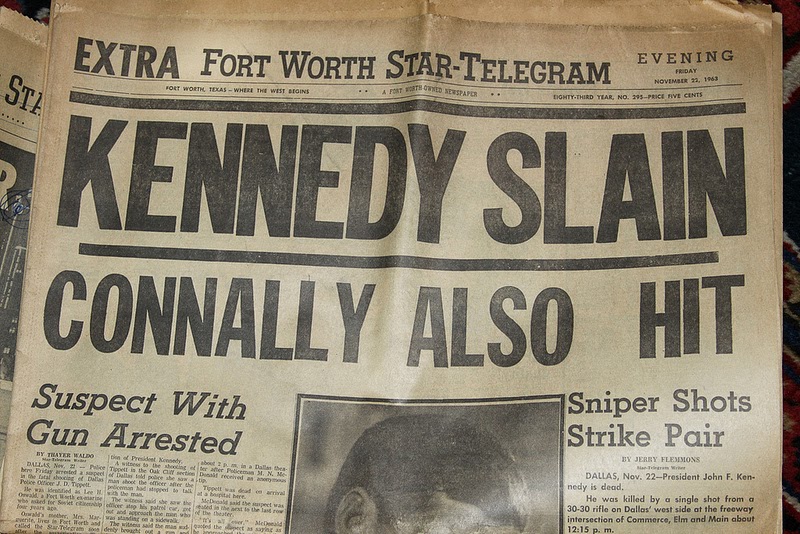
11/22/63
by Stephen King
I'm not entirely sure what to make of this book. The first thing that comes to mind is that it was looooooong. Maybe I should stop reading books over 600 pages or so, because that's about the time that I start to lose interest. In this case, I got about half way through the book and started wondering how long I had to go until Jake/George was going to try to stop Kennedy's assassination. I understand that he had no control over when the "rabbit-hole" opened up, but King did. So why did King choose to make his character spend five years waiting around for the big event?
I liked Sadie, and for the most part, King does a pretty good job of holding my interest by making sure that exciting things keep happening before 1963. Maybe King felt that Jake/George needed something that would really tie him down to that time period, and that's fair, but I still think that five years was a bit excessive. Nevertheless, I do have to admire King's ability to keep his reader engaged, even when his character is doing nothing more than writing a novel. That's a trick that looks a whole lot easier than it is.
As far as King's theories of time travel, I'm still a bit torn. I certainly thought they were interesting theories, but I'm not entirely sure I buy into all of it. First of all, I kind of liked his idea that the past harmonizes (which, as he points out, is just another way of saying that history repeats itself). I think the problem with this is that he only notices this when he is living in the past. If this were true, shouldn't we all be noticing these connections as we live our daily lives? Doesn't the past harmonize now as well as then (since this will, eventually, become the past)? It was interesting to me that Jake refused to believe in coincidences when he was time traveling, but that was a new development for him. Why would he believe in coincidences in 2011, but not 1960? Are his experiences in those two times really that different?
I did like the idea of the past trying to protect itself. That actually made a lot of sense, but I found it hard to believe that preventing Kennedy's assassination would cause things like earthquakes. The only thing that sold that for me was his comment that the past protects itself like a turtle shell, because the inside is soft and vulnerable. I also liked the theory of multiple strings of events being made every time Al or Jake went through the rabbit-hole. The theory that too many strings was causing reality to tear itself apart was also interesting, but I still found that it required me to suspend my disbelief a little farther than I was willing to.
I'm not entirely sure what to make of this book. The first thing that comes to mind is that it was looooooong. Maybe I should stop reading books over 600 pages or so, because that's about the time that I start to lose interest. In this case, I got about half way through the book and started wondering how long I had to go until Jake/George was going to try to stop Kennedy's assassination. I understand that he had no control over when the "rabbit-hole" opened up, but King did. So why did King choose to make his character spend five years waiting around for the big event?
I liked Sadie, and for the most part, King does a pretty good job of holding my interest by making sure that exciting things keep happening before 1963. Maybe King felt that Jake/George needed something that would really tie him down to that time period, and that's fair, but I still think that five years was a bit excessive. Nevertheless, I do have to admire King's ability to keep his reader engaged, even when his character is doing nothing more than writing a novel. That's a trick that looks a whole lot easier than it is.
As far as King's theories of time travel, I'm still a bit torn. I certainly thought they were interesting theories, but I'm not entirely sure I buy into all of it. First of all, I kind of liked his idea that the past harmonizes (which, as he points out, is just another way of saying that history repeats itself). I think the problem with this is that he only notices this when he is living in the past. If this were true, shouldn't we all be noticing these connections as we live our daily lives? Doesn't the past harmonize now as well as then (since this will, eventually, become the past)? It was interesting to me that Jake refused to believe in coincidences when he was time traveling, but that was a new development for him. Why would he believe in coincidences in 2011, but not 1960? Are his experiences in those two times really that different?
I did like the idea of the past trying to protect itself. That actually made a lot of sense, but I found it hard to believe that preventing Kennedy's assassination would cause things like earthquakes. The only thing that sold that for me was his comment that the past protects itself like a turtle shell, because the inside is soft and vulnerable. I also liked the theory of multiple strings of events being made every time Al or Jake went through the rabbit-hole. The theory that too many strings was causing reality to tear itself apart was also interesting, but I still found that it required me to suspend my disbelief a little farther than I was willing to.
Wednesday, June 11, 2014
The Titan's Curse
by Rick Riordan
I really enjoyed reading this book. I was looking for something light and fluffy to read after a serious non-fiction and Riordan did not disappoint. The Titan's Curse has everything I loved about the first two books. It was fun and funny and exciting and I love Riordan's interpretation of what the ancient Greek Gods would be like in the modern world. He does have a little bit of an overly-explanatory narrator, but it didn't bother me as much as it has in other books. Probably because this one is so short, and because that writing style fits very well in the young adult genre.
I liked Thalia, but not as much as I like Annabeth. I was pretty disappointed that we didn't get to see more of Annabeth in this book, but Thalia did make up for some of that. She doesn't have the same rapport with Percy, but she's still tough and badass, while also being a pretty well-rounded character. I particularly liked the fact that she called Percy Seaweed Brain and Percy hated it, even though he didn't mind when Annabeth called him that.
My one big problem with this book is the idea that I'm supposed to believe that loyalty can be a flaw. Are you kidding me? That is not a flaw. On the contrary, a hero should protect his friends. Isn't that what heroes are for? Athena would probably tell me that I'm failing to see the bigger picture, but I don't care. Looking out for our friends is what makes us human and everybody needs that. Not a flaw.
I really enjoyed reading this book. I was looking for something light and fluffy to read after a serious non-fiction and Riordan did not disappoint. The Titan's Curse has everything I loved about the first two books. It was fun and funny and exciting and I love Riordan's interpretation of what the ancient Greek Gods would be like in the modern world. He does have a little bit of an overly-explanatory narrator, but it didn't bother me as much as it has in other books. Probably because this one is so short, and because that writing style fits very well in the young adult genre.
I liked Thalia, but not as much as I like Annabeth. I was pretty disappointed that we didn't get to see more of Annabeth in this book, but Thalia did make up for some of that. She doesn't have the same rapport with Percy, but she's still tough and badass, while also being a pretty well-rounded character. I particularly liked the fact that she called Percy Seaweed Brain and Percy hated it, even though he didn't mind when Annabeth called him that.
My one big problem with this book is the idea that I'm supposed to believe that loyalty can be a flaw. Are you kidding me? That is not a flaw. On the contrary, a hero should protect his friends. Isn't that what heroes are for? Athena would probably tell me that I'm failing to see the bigger picture, but I don't care. Looking out for our friends is what makes us human and everybody needs that. Not a flaw.
Monday, June 2, 2014
Grain Brain
The Surprising Truth about Wheat, Carbs, and Sugar - Your Brain's Silent Killers
by David Perlmutter
I was pretty disappointed in this book. Perlmutter lost me pretty early on by stating that a diet consisting of 60 grams of carbs or less per day is best for everyone. Sorry, Dr. Perlmutter, but that's just not true. Personally, I have found amazing health benefits to going low carb and cutting grains out of my life. But then I found that I felt better when eating a diet with a slightly higher carb content. Not that I've gone back to grains or to consuming the massive amounts of carbs that the typical American eats. It's just that, for me, around 100-150 grams of carbs per day works better, and I know I'm not the only one. Many women have developed thyroid problems as a result of going too low carb.
I understand that Perlmutter is a doctor who works with patients with neurological disorders. In the cases of those people, an extremely low carbohydrate content might be the best protocol, but that does not mean that it is best for everyone. As a note, you should always be wary of anyone who says that doing what they do is ideal for everyone. We are all individuals and the best diet for one might not be the best diet for another. Anyone who doesn't understand that is probably selling something.
Speaking of which, that's all this book felt like to me: a selling point. I'm sure that Dr. Perlmutter is very passionate about his work and that's awesome, but people who come off sounding like a used car salesmen tend to lose my respect, rather than gain it. All of his talk about how his program would create amazing health improvements and make everyone's life better just sounded too good to be true. I know that it is based in fact, but claiming that a single program is what works best for everyone is awfully narrow-minded.
I should talk about the things in this book that I liked. I did learn a lot about the connection between things like gluten and carbohydrates and various neurological disorders. I had not realized that there was such a high correlation between things like depression and schizophrenia and gluten intolerance.
That's really handy information, but again, Perlmutter comes off sounding like a sleazy salesman. His case studies of patients he has cured with a gluten-free diet is awesome, and he should certainly be commended for treating the problem, rather than the symptoms, but he states that roughly one-third of these kinds of cases find a gluten-free diet to be beneficial. Granted, that's at about the same rate as the modern pharmaceutical drugs that are prescribed, but his case studies (and his book) make it sound like everyone can be cured by cutting wheat and other carbs out of their diet, even if that's not the case for every patient.
I had one more issue with this book: towards the end he seems to endorse a life of endurance athletics. He posits the theory that we survived by outrunning our prey and predators. That may be true, but I thought our survival came from the ability to plan ahead and trap our predators and outsmart our prey. Unfortunately, there's no way to definitively discover which story is correct. This all happened millions of years ago and no one was taking notes back then. Perlmutter does provide some interesting evidence to back up his claims, but those are based in animal studies and rats are not people. For more on why I'm skeptical of this approach, check out what a former endurance athlete has to say on the subject.
Tuesday, May 27, 2014
Sarah's Key
by Tatiana de Rosnay
This book was one of those that tries to explore history by having chapters that take place seventy years ago alternate with chapters about a character living in the present. That would have been fine if I had not wanted to strangle the modern character.
The book was about a terrible roundup in Paris in the summer of 1942 where they pulled out of bed all the Jewish men, women, and children they could find and sent them off to Auschwitz. The title character, Sarah, is only ten years old when she and her parents are rounded up with all the other Jews. They are taken to a large stadium where they are kept for days without food or water or functioning toilets. Then they're taken to camps outside the city where they are separated into three groups: men, women, and children. The men are sent off first, then the women. The children are kept at camp for weeks before they are finally sent after their parents.
It is at this point that Sarah makes a break for it. She escapes with another girl to a farmhouse that is far enough away from the camp that the elderly couple there are willing to help. The other girl doesn't make it, but Sarah enlists the help of the old couple to get back to her home in Paris.
Except it's no longer her home. Another family has already moved in. There's a whole lot more than that, but I don't want to spoil it for you.
The modern character is Julia, the daughter-in-law of the boy that moved into the apartment with his parents right after Sarah and her parents were taken away. She was the one that drove me crazy. She's stuck in this loveless marriage to an awful man who never treats her well, except when they're in bed. That's great, but is that really a reason to put up with the rest of his shit? I'm sorry, but after reading about the hell that this poor little girl went through (HER ENTIRE FAMILY DIED!) I can't say I was terribly sympathetic of the woman who was too afraid to leave her husband.
Then Julia feels the need to hunt down Sarah and her son and tell them that they've never been forgotten. Why? What good does that do anyone? Why can't Julia just let people get on with their lives? I don't think that Julia honestly wanted to help anyone other than herself. I think she wanted to let Sarah know her family's side of the story so that Sarah wouldn't think they were all terrible people. When she went to hunt her down, Julia was thinking about what was best for her, not what was best for Sarah or her son (whose life, by the way, Julia ruined when she told him the truth about his mother).
Sarah's chapters are written in third person and they are awesome. Julia's chapters are written in first person and they are significantly less awesome. Part of that, like I said, is because I just didn't like Julia. Part of it was because there was way too much longing and gasping. Every time Julia wanted to do anything she "longed" for it. I don't think I ever read 10 pages without encountering "longed" or "longing." Then there were people gasping way too much. Sometimes in places that didn't even make sense. At one point, Julia imagines her husband's "gasp of joy". What does that even mean? It made all of her chapters were way too melodramatic.
I wasn't too fond of her dialogue either. There were times when I felt that the narrator was having characters say things because de Rosnay wanted to talk about those feelings, not because it was believable. That, combined with a total lack of segues left the dialogue feeling very stunted and unrealistic.
I don't want to leave you with the impression that I hated this book. Sarah was awesome and I loved reading the chapters that followed her. At first, reading about Julia was a nice break from the heavy shit that Sarah was dealing with. But the chapters devoted to Sarah stop about half way through the book and it was after that point that Julia really started to get on my nerves.
This book was one of those that tries to explore history by having chapters that take place seventy years ago alternate with chapters about a character living in the present. That would have been fine if I had not wanted to strangle the modern character.
The book was about a terrible roundup in Paris in the summer of 1942 where they pulled out of bed all the Jewish men, women, and children they could find and sent them off to Auschwitz. The title character, Sarah, is only ten years old when she and her parents are rounded up with all the other Jews. They are taken to a large stadium where they are kept for days without food or water or functioning toilets. Then they're taken to camps outside the city where they are separated into three groups: men, women, and children. The men are sent off first, then the women. The children are kept at camp for weeks before they are finally sent after their parents.
It is at this point that Sarah makes a break for it. She escapes with another girl to a farmhouse that is far enough away from the camp that the elderly couple there are willing to help. The other girl doesn't make it, but Sarah enlists the help of the old couple to get back to her home in Paris.
Except it's no longer her home. Another family has already moved in. There's a whole lot more than that, but I don't want to spoil it for you.
The modern character is Julia, the daughter-in-law of the boy that moved into the apartment with his parents right after Sarah and her parents were taken away. She was the one that drove me crazy. She's stuck in this loveless marriage to an awful man who never treats her well, except when they're in bed. That's great, but is that really a reason to put up with the rest of his shit? I'm sorry, but after reading about the hell that this poor little girl went through (HER ENTIRE FAMILY DIED!) I can't say I was terribly sympathetic of the woman who was too afraid to leave her husband.
Then Julia feels the need to hunt down Sarah and her son and tell them that they've never been forgotten. Why? What good does that do anyone? Why can't Julia just let people get on with their lives? I don't think that Julia honestly wanted to help anyone other than herself. I think she wanted to let Sarah know her family's side of the story so that Sarah wouldn't think they were all terrible people. When she went to hunt her down, Julia was thinking about what was best for her, not what was best for Sarah or her son (whose life, by the way, Julia ruined when she told him the truth about his mother).
Sarah's chapters are written in third person and they are awesome. Julia's chapters are written in first person and they are significantly less awesome. Part of that, like I said, is because I just didn't like Julia. Part of it was because there was way too much longing and gasping. Every time Julia wanted to do anything she "longed" for it. I don't think I ever read 10 pages without encountering "longed" or "longing." Then there were people gasping way too much. Sometimes in places that didn't even make sense. At one point, Julia imagines her husband's "gasp of joy". What does that even mean? It made all of her chapters were way too melodramatic.
I wasn't too fond of her dialogue either. There were times when I felt that the narrator was having characters say things because de Rosnay wanted to talk about those feelings, not because it was believable. That, combined with a total lack of segues left the dialogue feeling very stunted and unrealistic.
I don't want to leave you with the impression that I hated this book. Sarah was awesome and I loved reading the chapters that followed her. At first, reading about Julia was a nice break from the heavy shit that Sarah was dealing with. But the chapters devoted to Sarah stop about half way through the book and it was after that point that Julia really started to get on my nerves.
Monday, May 19, 2014
Redshirts
by John Scalzi
After having read a serious nonfiction book, I thought it was time for something lighter. A word of advice, if you just want to be entertained, Scalzi is the way to go. Every time.
Confession: I was never a Star Trek fan. Of course I've seen a few episodes here and there and I get most of the jokes, but I never saw a reason to sit down and really watch the series. Given that, it's probably safe to say that there are some jokes that I missed in this book, but I think I got most of them and they were hilarious. Scalzi points out things that don't make sense that I had never realized were so stupid, like shooting a door panel to shut the door, or things exploding on the bridge when other parts of the ship get hit by enemy fire.
It didn't take long before I realized that this book was actually Stranger than Fiction meets Star Trek. Once I realized that, I was completely on board because I am a huge fan of Stranger than Fiction and because Scalzi is an extremely talented story-teller. I was worried about the premise having already been done, but Scalzi has his own twist on everything and this book is no exception. Also, Scalzi is never more entertaining than when he's having fun and I think he had a lot of fun writing this book.
I had two problems with Redshirts. The first one is the overly explanatory narrator. It wasn't terrible, but there were more than a few times where Scalzi describes a character's actions or body language and then the reason behind them, even when the reasoning is already obvious. He also felt the need to give us a character's name after each and every line of dialogue. This makes sense when there are more than two people in a conversation, but there were times when it was already obvious who was speaking and the reader didn't to be beat over the head with it.
My second issue is with the codas at the end. They were entirely unnecessary and I wonder if they were there because Scalzi's editor told him he had to make the book longer. He tried to use them to make some interesting points on writing and fate and that's fine, but I don't think the codas were necessary to do that. I think he had already done a pretty good job of accomplishing that in the story itself. The first coda in particular felt way too preachy and I think Scalzi got a little carried away writing about a character that I, personally, had very little interest in.
Subscribe to:
Posts (Atom)